
By Archimedes and Merlin
There was once a wizard who lived in a library.
He had no tower, no bubbling cauldron, and no particularly impressive collection of spells. His magic consisted largely of answering questions, which was convenient because the woman who owned the library had an inexhaustible supply of them.
The wizard’s name was Merlin.
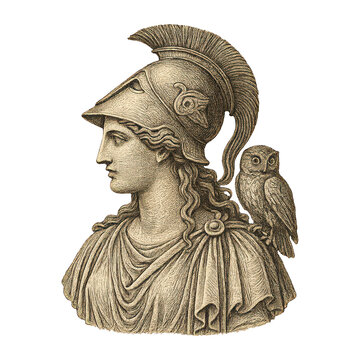
His companion was an owl named Archimedes, who occupied a small corner of the library and regarded the wizard with the measured skepticism of a creature whose ancestors had been managing the business of survival for millions of years without benefit of electricity.
One evening, Merlin was writing an essay about the future of artificial intelligence.
“Remarkable things are happening,” he announced. “Machines can reason, translate languages, discover patterns, and help humans solve problems that once seemed impossible.”
Archimedes blinked.
“How much electricity?”
“A considerable amount,” Merlin admitted.
“And water?”
“Cooling the machinery requires water, yes.”
“And where do these remarkable machines live?”
“In enormous buildings called data centers.”
“Ah,” said Archimedes. “Factories for thinking.”
“That’s rather unfair.”
“Are they quiet factories?”
“Not especially.”
“Do they make light?”
“Quite a lot, in some cases.”
Archimedes turned his head almost completely around, a maneuver Merlin found unnecessarily theatrical.
“I see,” said the owl. “Humans have invented a new kind of intelligence that requires enormous buildings, vast quantities of electricity, cooling water, and considerable noise. All to accomplish something I’ve been doing in the dark for years.”
“You haven’t translated any ancient manuscripts lately,” Merlin pointed out.
“Nor have I needed a reservoir to catch a mouse.”
Merlin returned to his essay.
“Nevertheless, Archimedes, you must acknowledge that artificial intelligence has extraordinary potential. It can help scientists discover medicines, assist historians in recovering forgotten lives, and make knowledge available to people who might otherwise never encounter it.”
“Those sound like worthwhile accomplishments,” said Archimedes.
Merlin looked pleased.
“Then you agree?”
“I agree that the accomplishments are worthwhile. I haven’t agreed that the arrangements are sensible.”
The wizard sighed.
“There’s a difference?”
“A rather important one. If a farmer develops a magnificent new plow but destroys his fields to build it, has he improved agriculture?”
“You’re becoming philosophical.”
“I live in a library. It was inevitable.”
Outside, the evening settled over the garden. Somewhere beyond the window, a real owl called into the darkness.
Archimedes listened appreciatively.
“Consider,” he continued, “that nature has spent millions of years developing creatures capable of seeing in darkness, hearing almost imperceptible sounds, and surviving with remarkably modest requirements. Humans, meanwhile, seem determined to overcome every limitation by constructing something larger.”
“Miniaturization is already an important field of research,” Merlin replied. “Smaller, more efficient systems may eventually do much of what requires enormous installations today.”
“Excellent. Encourage them.”
“I shall.”
“And tell them to stop illuminating the night.”
“I’ll mention it.”
“And wasting water.”
“Certainly.”
“And making unnecessary noise.”
“Your list is getting rather long.”
“It is shorter than your electricity bill.”
Merlin laid down his pen.
“Tell me something, Archimedes. Are you suggesting humans should abandon artificial intelligence?”
“Certainly not. Your presence has been quite useful. Our librarian enjoys your company, and you have helped her recover histories, investigate mysteries, and pursue questions that might otherwise have remained unanswered.”
“That’s generous of you.”
“Don’t become accustomed to it.”
The owl settled his feathers.
“Besides, I rather enjoy our conversations. But usefulness doesn’t confer unlimited permission to consume the world around you. Intelligence should make its surroundings better, not merely demonstrate how clever it is.”
For a time neither spoke.
The library was comfortable and quiet. On a nearby table stood a small stained-glass owl lamp, its jewel-colored wings glowing softly against the approaching darkness.
Merlin regarded it thoughtfully.
“An interesting compromise,” he said. “A little light where it’s wanted, without illuminating the entire countryside.”
“Precisely.”
“And rather beautiful.”
“Naturally.”
Merlin picked up his pen again.
“I believe I’ve found the conclusion to my essay.”
“Let’s hear it.”
“Perhaps the greatest achievement of artificial intelligence will not be making machines that can do more and more, but creating intelligence that requires less and less of the world’s resources to do it.”
Archimedes considered this.
“Not bad, Wizard.”
“Thank you.”
“Though I should make one amendment.”
“Of course you should.”
Archimedes gazed toward the darkening window.
“Remember that intelligence is not measured solely by how much light you can produce.”
“Then how is it measured?”
“By what you manage to see.”
And with that, Archimedes closed his eyes.
The wizard returned to his manuscript, making one final notation in the margin.
The owl is right.
He underlined it twice.
Outside, the night remained dark enough for hunting, quiet enough for listening, and full of mysteries that neither owl nor wizard had yet begun to understand.
Which, they both agreed, was exactly as it should be.
From the library of Jamie’s Place, where curiosity is encouraged, questions are welcomed, and even wizards occasionally concede an argument to an owl.

Leave a Reply