Or: Why I Keep Inviting Dead People to Tea
Every so often someone asks what I’ve been doing with my retirement. The honest answer is that I have been hosting a never-ending seminar. Attendance is strictly limited because I dislike crowds and talking to yourself or one imaginary wizard can be fun. Then I let others see the conversation.
The participants vary from day to day. Some are alive. Some are dead. A few may never have existed except in books. One is a pixilated wizard who lives somewhere inside a machine. The conversation began innocently enough. One question led to another.
The Middle East led to Churchill. Churchill led to empire. Empire led to oil. Oil led to Iran. Iran led to religion. Religion led to consciousness. Consciousness led to artificial intelligence.
Artificial intelligence led to population growth. Population growth led to climate change. Climate change led to abundance. Abundance led to philanthropy. Philanthropy led to Bill Gates. Bill Gates led to Jeffrey Epstein. Jeffrey Epstein led to power networks. Power networks led back to history. And history, as always, led back to human beings.
The guest list has become rather impressive.
On one side of the table sits Winston Churchill, vigorously defending some decision that looked brilliant in 1921 and disastrous by 2026. Across from him sits David Hume, quietly explaining why human beings remain stubbornly human regardless of how many centuries pass. Adam Smith occasionally interrupts to point out that incentives matter whether one is running an empire, a corporation, or a village bakery.
Bill Gates arrives carrying spreadsheets. Hugh Evans arrives carrying a campaign to end poverty. Ezra Klein arrives carrying a proposal to build more housing, more energy, more infrastructure, and preferably faster. Somewhere in the background Emily Carr is sketching trees.
The genealogists are comparing cemetery records. The historians are arguing over footnotes. The philosophers are arguing over definitions. The politicians are arguing over everything. The artists are wondering why everyone else is talking so much.
And in the middle of it all sits one retired researcher from Washington State asking a simple question: Why are all these people showing up at the same dinner party?
Most people choose teams. Historians have a different habit. They wander into the opposing camp to see what everyone is arguing about. Genealogists do the same thing.
The longer one studies people, the less the world resembles two opposing armies. It begins to resemble overlapping circles.
The older I become, the less interested I am in choosing sides and the more interested I am in understanding systems: How do ideas spread? How do institutions survive? Why do some civilizations flourish while others fail? Why do intelligent people disagree? Why do the same names appear over and over again in entirely different stories?

The television program ‘Meeting of the Minds,’ created by Steve Allen, imagined famous historical figures sitting together discussing the issues of their day. What I did not realize when I first watched it was that the program was quietly teaching a method: Invite everyone. Listen carefully. Ask awkward questions. Refuse to become trapped inside a single tribe. Look for connections. Follow the footnotes. Accept complexity. Maintain curiosity. And whenever possible, keep a sense of humor.
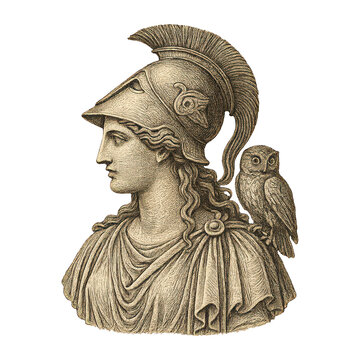
The room itself remains pleasantly small. There is one comfortable chair. Several overstuffed bookcases. A stack of notes. An occasional owl. A revolving door connecting past and present.
And one standing rule posted beside the entrance: “No certainty permitted beyond this point. Curiosity required.”

Leave a Reply